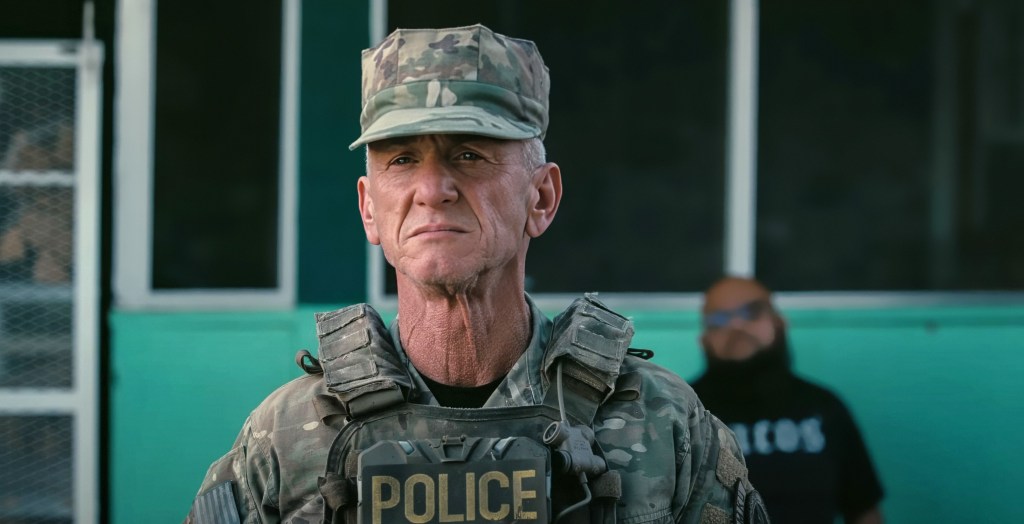
The Academy Awards ceremony is always a night of glitz, glamour, and anticipation, but sometimes, it's the moments of absence that spark the most conversation. The 2026 Oscars were no exception, as veteran actor Sean Penn claimed his third coveted golden statuette for Best Supporting Actor, yet was notably absent from the star-studded event. His win for his compelling performance in Paul Thomas Anderson's political drama, One Battle After Another, cemented his place further in cinematic history, but his decision to skip the ceremony drew headlines and highlighted his unwavering commitment to humanitarian causes.
Curious about Who Won Best Supporting Actor 2026 and the full story behind the night's most talked-about win? Dive into the details of Penn's latest triumph and the powerful reasons behind his non-appearance.
A Third Golden Man for a Screen Legend
Sean Penn's victory in the Best Supporting Actor category at the 2026 Academy Awards was a testament to his enduring talent and the gravitas he brings to every role. His portrayal of a seasoned power broker, later identified as the calculating strategist Colonel Steven J. Lockjaw, in Paul Thomas Anderson's One Battle After Another, was nothing short of commanding. Penn delved into the shifting loyalties and ideological battles central to the film, delivering a performance that resonated deeply with critics and Academy voters alike. This marks his first win in the supporting actor category, adding to an already illustrious career defined by powerful lead performances.
The film itself, a political drama crafted by the visionary Paul Thomas Anderson, proved to be fertile ground for Penn's intense acting style. This collaboration wasn't their first; Penn had previously worked with Anderson in a smaller role in the acclaimed Licorice Pizza. Anecdotes from the production reveal Penn's initial hesitation to even read the script for One Battle After Another, only to be captivated by it within pages, reportedly sitting "dripping naked on the floor" after a shower, engrossed in the story. Such is the power of a compelling narrative and a character destined for an actor of Penn's caliber. To learn more about his remarkable career and previous wins, explore Sean Penn's Third Oscar: A Look Back at His Decorated Career.
Penn's Illustrious Oscar Journey So Far
At 65, Sean Penn continues to build one of the most decorated careers in contemporary acting. Before his 2026 triumph, he had already claimed two Best Actor Oscars for truly unforgettable performances: one for his searing role in Clint Eastwood's Mystic River in 2004, and another for his poignant portrayal of Harvey Milk in Gus Van Sant's Milk in 2009. These wins were preceded by multiple Best Actor nominations for films like Dead Man Walking (1996), Woody Allen's jazz-inspired drama Sweet and Lowdown (2000), and the heartfelt I Am Sam (2002). Each nomination and win underscore his versatility and consistent ability to disappear into complex characters, making him one of Hollywood's most respected figures.
The Unmissable Absence: Penn's Humanitarian Call to Action
The buzz surrounding Penn's win was amplified by his conspicuous absence from the 2026 Academy Awards ceremony. When presenter Kieran Culkin announced Penn as the winner, he quipped, "Sean Penn couldn't be here tonight, or he didn't want to," a remark that instantly sparked speculation. However, the reason for his non-attendance quickly became clear and profoundly impactful: Penn was in Ukraine, dedicated to humanitarian efforts amidst the ongoing conflict.
This commitment was highlighted by Mykola Serha, leader of Cultural Forces, a Ukrainian association supporting military personnel through arts. Serha confirmed Penn's presence in the country, a sentiment echoed by Ukrainian President Volodymyr Zelenskyy, who posted a photo of himself meeting with Penn on social media. Zelenskyy's message resonated deeply: "Because of you, Sean, we know what a true friend of Ukraine is. You have been with Ukraine since the first day of the full-scale war. And today as well. And we know that you will continue to stand with our country and our people." This selfless act of prioritizing global humanitarianism over personal accolades is not new for Penn, who notably gave one of his previous Oscar statuettes to President Zelenskyy in 2022 as a symbol of solidarity. To delve deeper into this compelling aspect of his character, read Why Sean Penn Skipped His 2026 Oscar Win: The Ukraine Story.
A History of Oscar No-Shows
While his 2026 absence was rooted in a profound humanitarian mission, Penn has a documented history of skipping major awards ceremonies. He previously bypassed the Oscars three times when nominated for Best Actor: for Dead Man Walking in 1996, Sweet and Lowdown in 2000, and I Am Sam in 2002. This pattern suggests a complex relationship with the pomp and circumstance of Hollywood award shows. This year, his absence wasn't limited to the Oscars; he also bowed out of attending the BAFTA Film Awards and Actor Awards in February, despite winning Best Supporting Actor at both. Interestingly, he did attend the Golden Globe Awards in January, where he was also nominated in the Best Supporting Actor category but lost to Stellan Skarsgård for Sentimental Value. This recurring theme of detachment from the awards circuit, juxtaposed with his passionate engagement in social and political causes, paints a picture of an artist whose priorities often lie far beyond the red carpet.
"One Battle After Another": The Film and Its Competition
Paul Thomas Anderson's One Battle After Another is a dense political drama that provided Sean Penn with the perfect canvas to showcase his profound acting prowess. His character, Colonel Steven J. Lockjaw, is an intricate study of power, strategy, and moral ambiguity, navigating a treacherous landscape of shifting loyalties. Penn's ability to imbue the role with layers of calculation and an underlying sense of menace contributed significantly to the film's thematic depth and narrative tension.
For any supporting actor, the goal is often to make a significant impact without overshadowing the main narrative, providing critical thematic depth or driving key plot points. Penn's performance as a 'power broker' clearly achieved this, creating a memorable character that resonated with the Academy. His collaboration with Anderson, a director known for eliciting powerful performances from his ensemble casts, proved to be a winning combination.
A Stellar Field of Nominees
The Best Supporting Actor category in 2026 was packed with formidable talent, making Penn's victory even more impressive. He faced off against a stellar lineup that included both beloved industry veterans and one of Hollywood's most exciting young stars:
- Benicio del Toro for One Battle After Another (Penn's own castmate)
- Stellan Skarsgård for Sentimental Value
- Delroy Lindo for Sinners
- Jacob Elordi, who played the title character in Guillermo del Toro's Frankenstein
The competition was fierce, with Skarsgård having previously bested Penn at the Golden Globes. However, the Academy ultimately recognized Penn's impactful and nuanced performance, distinguishing it from an exceptionally strong field.
The Enduring Legacy of Sean Penn
Sean Penn's win for Best Supporting Actor in 2026 is more than just another accolade; it's a reaffirmation of his status as one of cinema's most compelling and dedicated artists. His career has been a masterclass in versatility, from intense dramas to dark comedies, always delivered with an unflinching commitment to character. Beyond the screen, his consistent and often courageous engagement in social and political activism, particularly his deep involvement in Ukraine, showcases a profound sense of responsibility that transcends his profession.
This latest Oscar solidifies his legacy as an actor who not only commands the screen with extraordinary talent but also uses his platform to champion causes far greater than himself. He reminds us that artistry and advocacy can, and often do, walk hand-in-hand.
In conclusion, when asking Who Won Best Supporting Actor 2026, the answer is unequivocally Sean Penn for his powerful role in One Battle After Another. Yet, the story extends far beyond the stage, revealing an actor whose priorities lie in making a tangible difference in the world, even if it means foregoing the personal glory of an Oscar win. His absence was a poignant statement, underscoring that for Sean Penn, some battles are far more important than any award.